Meet Mocha — the world's most curious chocolate scientist
Mocha is a curious chocolate "Science" lab that goes on adventures with his owners, Samantha and Joey and his friends, Half, Full, and George. These interactive adventures are for readers Ages 4–10.

Mocha
Mocha is a curious chocolate "Science" lab that goes on adventures with his owners, Samantha and Joey and his friends, Half, Full, and George. These interactive adventures are for readers Ages 4–10.
Science should be delicious
We believe every child is a natural scientist. Mocha's adventures are designed to spark that curiosity — using the familiar, comforting world of chocolate to introduce real scientific concepts in a way that's joyful, accessible, and memorable. When kids finish a Mocha book, they don't just know a science fact — they feel like scientists themselves.
Multilingual from day one
Every book is available in English, Spanish, and French — because science belongs to every child, in every language.
Real science, real fun
Each story is built around genuine STEM concepts reviewed for age-appropriate accuracy. No dumbing down — just smart storytelling.
Interactive by design
Quizzes, fun facts, and animations on every page keep young readers engaged and learning without feeling like school.
8 books. 8 science adventures.
Space
Blast off with Mocha and the Star Pack! Explore stars, planets, and what lies beyond our sky in this free adventure.
Observation
Science starts with looking closely. Mocha teaches kids how to use their senses to make careful observations.
Weather
Rain, wind, clouds, and sunshine — Mocha investigates what makes weather change from day to day.
Experimentation
What happens when you test your ideas? Mocha walks kids through forming a hypothesis and running an experiment.
Forces
Push, pull, and everything in between. Mocha explores how forces make things move and stop.
Energy
Where does energy come from and where does it go? Mocha investigates heat, light, and motion.
Ecosystems
Every living thing has a role to play. Mocha explores how plants, animals, and habitats depend on each other.
Heredity
Why do puppies look like their parents? Mocha digs into traits, genes, and what gets passed down.
Built for learning, loved by families
Curriculum-aligned
Each book maps to early STEM learning standards for Pre-K through Grade 2, making Mocha a perfect classroom companion.
Read-aloud friendly
Short, rhythmic sentences and vivid illustrations make every book perfect for bedtime reading or classroom read-alouds.
Language immersion
Switch languages mid-book to support bilingual learners or introduce a new language through familiar, engaging stories.
Discussion prompts
Every book ends with open-ended questions designed to spark conversation between children and the adults in their lives.
Meet the Pack
These stories grew out of the bedtime tales I made up each night for my amazing children, Samantha and Joey, as they drifted off to sleep. They loved our dogs so much that we imagined adventures the dogs might have while the children were at school. What we do remember is the final song we sang before tucking the children in, and every story ends with the Half & Full song. I hope you come to love these characters as much as we do.
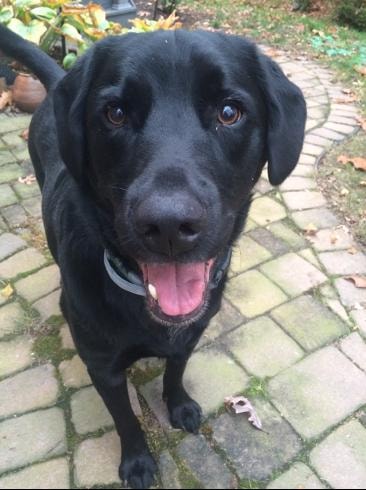
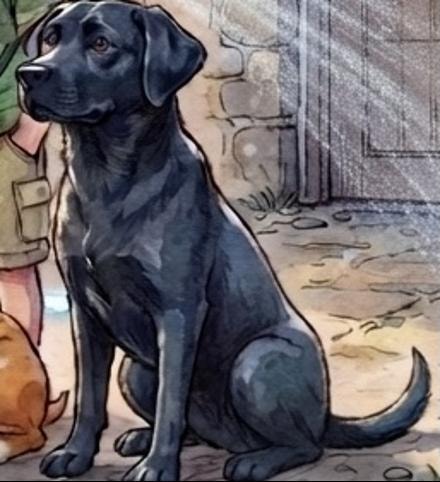
Mocha
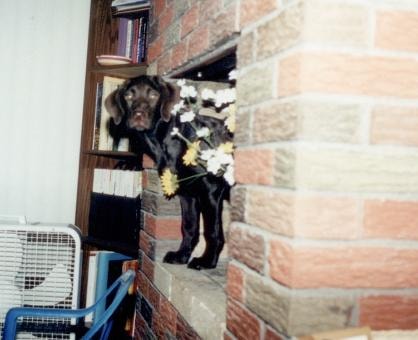
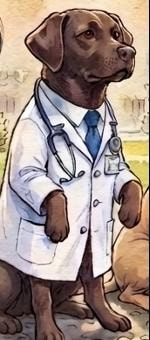
She was the OG. I had always thought chocolate labrador retrievers were beautiful and hoped that someday I might have one of my own. Mocha was a wedding gift from my beautiful wife, Jenn, and I loved her as if she were our child. We did everything together, and she never left my side. When I was teaching high school science, she was there planning with me. When I was working on my doctorate in science education, she sat beside me on the couch. She was my Science Lab — smart, curious, and loving — and in these stories, Mocha takes her place as the main character.
Honey
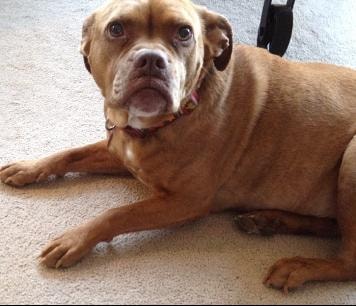
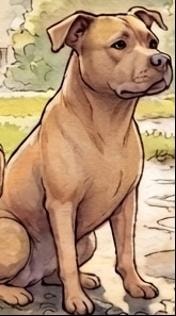
"Half"When Mocha got older and Samantha and Joey started school, we thought a friend would keep her company and help her stay active. Honey was described as a bulldog and boxer mix, though we always thought she was more likely an American pit bull and boxer mix. She was as sweet as honey and became Mocha's companion whenever we were not around. She also had an underbite that showed only half of her teeth, so the children started calling her "Half."
George
When Mocha walked over the rainbow bridge, Honey, or "Half," needed a new friend. Around that time, a Facebook connection was fostering Labrador puppies, and that is how we met George. He soon became part of the pack. George was very timid at first and was happy to let Honey lead the way.
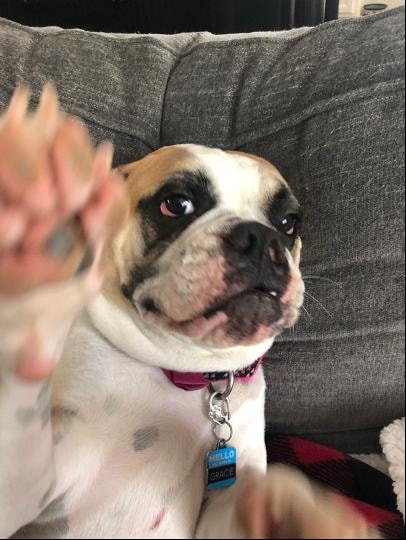
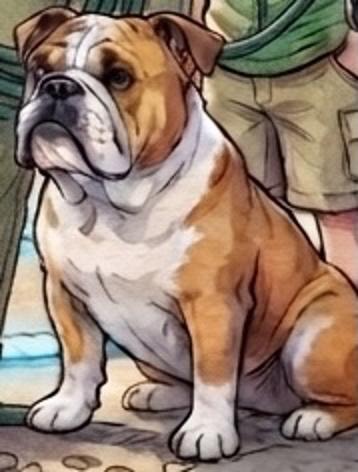
Gracie
"Full"When it was Honey's time to walk over the rainbow bridge, George needed someone to play with, and we found Gracie online. She was mostly English bulldog with a smidge of boxer, and because her owner did not see a need for her, we brought her home and added her to the pack. Her full English bulldog underbite gave her the nickname "Full."
Chester
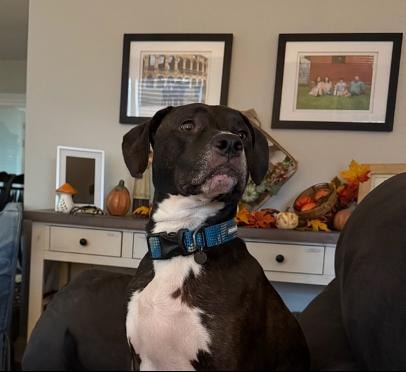
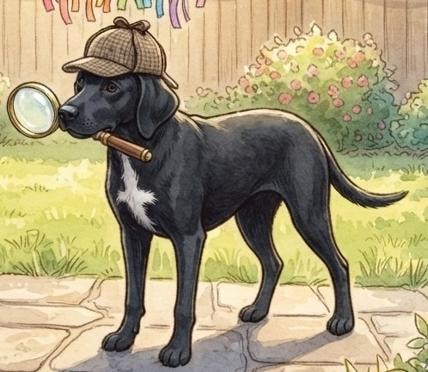
"Inspector Hound"George left us way too soon to join Mocha and Honey on the other side of the rainbow bridge. Like the others before her, Gracie needed a friend, so we rescued Chester. We thought he was a Labrador, but it turned out he was part pit bull and part hound. He was the most curious dog, with an incredible sense of smell, and we started calling him "Inspector Hound" because on our walks he would zigzag back and forth, inspecting everything along the way.
Ms. Concepcion
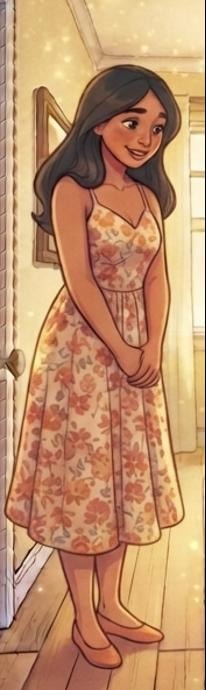
Ms. Concepcion is a fictional character whose name plays on the word misconception — an incorrect understanding of a scientific idea. In science, a misconception is a commonly held belief about how the natural world works that conflicts with established scientific evidence. These ideas often come from everyday experiences, cultural myths, or misunderstandings learned along the way. Throughout these books, Ms. Concepcion shares her mistaken theories, and Mocha gently helps set the science straight.
Dr. Len Annetta
Dr. Len Annetta is the Dean of the Zucker Family School of Education at The Citadel in Charleston, SC. A career long science educator, his work has focused on technology's influence on engaging young learners with science. The adventures in these books stem from bedtime stories he would tell his children when they were young.
Learn more at www.lenannetta.com